
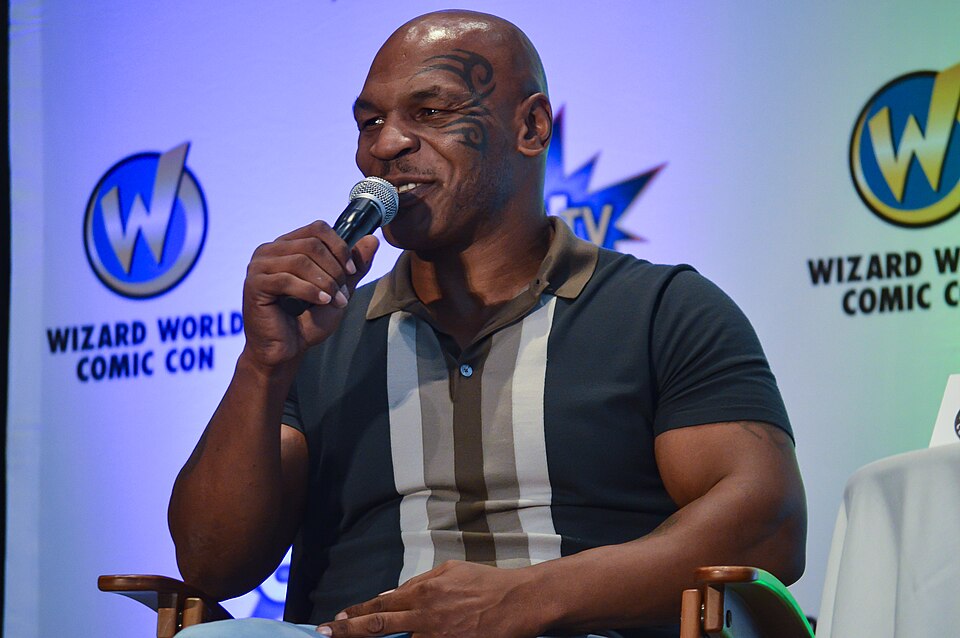
Iconic Boxer Mike Tyson praised the White House for reclassifying marijuana under federal drug rules.
Tyson publicly welcomed President Donald Trump’s executive order signed in December that shifted marijuana into a less restrictive category under federal law.
The move reclassified cannabis as a less dangerous drug, easing certain restrictions on how it can be researched, purchased and sold, while stopping short of fully legalizing marijuana nationwide.
Under the order, marijuana was moved out of the Drug Enforcement Administration’s Schedule I category, a classification previously shared with heroin, ecstasy and LSD.
Trump just rescheduled marijuana! But there’s a huge catch!😳 pic.twitter.com/stSHvZwMFc
— RAW Josh (@rawkandrolling) December 18, 2025
Schedule I drugs are defined as substances with no accepted medical use and a high potential for abuse, making their manufacture, sale and possession federal crimes without explicit authorization.
The new classification places marijuana under Schedule III, alongside drugs such as Tylenol with codeine and anabolic steroids, which regulators describe as having a “moderate to low potential for physical and psychological dependence.”
The executive order states that the central aim of the accelerated reclassification process is to “increase medical marijuana and CBD research.”
Getting cannabis safe and legalized for adults@royalqueenseeds x @itstyson20🥊 pic.twitter.com/mL5ZRZJUDy
— Mike Tyson (@MikeTyson) October 9, 2025
Before signing the order, Trump said he was considering a shift in marijuana’s classification, noting that such a move could unlock “tremendous amounts of research.”
While the order does not legalize marijuana at the federal level, it marks one of the most significant changes to national cannabis policy in decades.
25 years ago, Mike Tyson defeated Andrew Golota by RTD in round 2 of 10 (later changed to a NC after Tyson failed a post-fight drugs test for marijuana). Golota suffered a concussion, fractured left cheekbone & a herniated disc.
pic.twitter.com/sCA3ll53RI— ᴋᴀʏᴏ ✘ (@KOJournals) October 20, 2025
Currently, cannabis is legal for medical use in 40 states and permitted for recreational use in 24 states.
Despite that widespread acceptance at the state level, marijuana’s former Schedule I status left much of the industry operating on the edges of the U.S. financial system.
Retail sales climbed to an estimated $30 billion last year, yet many cannabis businesses remained unable to access basic banking services.
Mike Tyson (@MikeTyson) told me he used Marijuana before his fight against Jake Paul, immediately after the fight, and he used a lot of it when he made the decision to agree to the fight to begin with. Mike says he would not have agreed to do the fight if he was sober, and… pic.twitter.com/PTnR4ibRe9
— Jackson Thompson (@JackThompsonFOX) July 2, 2025
Dispensary operators have long said that federal restrictions prevented them from accepting credit or debit cards, since payment processors often refused to work with cannabis-related businesses.
Traditional banks have also been reluctant to issue loans, viewing marijuana companies as high-risk clients due to conflicting state and federal laws.
Industry observers say the new Schedule III status could mark a turning point, allowing dispensaries and growers to open bank accounts, secure financing and process electronic payments more easily.
Those changes could further integrate the cannabis sector into the broader economy.
Tyson suggested that the shift could also affect employment data by formally recognizing jobs that already exist in the industry.
In a post on X, the former heavyweight champion thanked the president directly.
“Thank you [President Trump] for rescheduling cannabis. This decision reflects listening to people across the country and taking a practical step toward modernizing outdated policies. It supports American workers, families, and businesses, and allows over 500,000 existing jobs to finally be counted,” Tyson wrote.
Industry figures estimate that the legal cannabis market employed more than 400,000 people nationwide in 2024.
The Pew Research Center has placed the number of licensed dispensaries at nearly 15,000, a figure that has continued to grow as additional states expand access.
Tyson also used his message to urge further action beyond reclassification, calling for relief for individuals convicted of certain marijuana-related offenses.
“Clemency and federal legalization are the next important steps. Americans across the political spectrum agree that no one should remain incarcerated for non-violent marijuana offenses,” he wrote.
The boxer has been actively involved in advocacy efforts tied to cannabis policy.
In late June, Tyson led a group of current and former professional athletes, including Kevin Durant, Dez Bryant and Antonio Brown, in signing a letter sent to the White House.
Mike Tyson leads athletes championing marijuana reform pic.twitter.com/6XBEwJhJTc
— Karli Bonne’ 🇺🇸 (@KarluskaP) June 30, 2025
The letter pushed for moving marijuana from Schedule I to Schedule III, granting clemency for what it described as “nonviolent” marijuana convictions and ending what the group called “discriminatory banking practices” tied to cannabis regulations.
Speaking to Fox News in a June interview, Tyson described rescheduling marijuana as the “most important” objective outlined in the letter.
He contrasted the current administration’s approach with that of previous presidents.
“It was a letdown,” Tyson said when asked about how Barack Obama and Joe Biden handled federal marijuana policy.
“We have a different president now, so we’re talking to him. So, it seems a lot different to talk to President Trump than it did with the other guys.”
Tyson’s comments reflect a long-standing personal connection with Trump, dating back to the 1980s, when Tyson rose to prominence in the boxing world and Trump became a high-profile New York City real estate developer and celebrity figure.
Despite his public support for the executive order, Tyson said there are clear limits to their shared interests.
Asked whether he would ever invite Trump to use marijuana with him, Tyson dismissed the idea outright.
“No way. No, he doesn’t smoke. He doesn’t believe in anything that can enhance the motor skills of your brain. And I respect that,” Tyson remarked.
The president’s decision also drew commentary from figures outside the sports world.
Ahead of the order, comedian and television host Bill Maher, who has been open about his marijuana use, reacted enthusiastically during an August episode of “Real Time.”
“Finally, he got around to me,” Maher joked at the time.
During his “New Rules” segment, Maher framed the move as a savvy political calculation.
This is absolutely hilarious!@billmaher pic.twitter.com/1tXh0ClWl0
— Bruce LeVell (@Bruce_LeVell) August 23, 2025
“I told ya so,” he said. “I’ve been telling Democrats for years, the Republicans are gonna steal pot from you as an issue.”
Maher continued by describing Trump’s political style, saying, “What did you expect? He’s the master at winning votes from small groups who are passionate about one issue, picking up a couple percent here, a couple there, until on election Night, it’s ‘Y-M-C-A!’”
As he wrapped up the episode, Maher compared marijuana voters to other groups that have shifted support in recent elections.
“Did he win the Black vote?” Maher asked. “Not even close, but he doubled what he got in 2020, and in places like Philly, Detroit and Milwaukee, that was the difference. And now he’s gonna do it with pot. Finally, he got around to me.”